

Robin Knows Who You Are!
Friendship Isn’t Quite the Reason
That familiar little red-breasted visitor following you around the garden might know more about you than you think. Scientists believe robins can recognise individual people, and their apparent friendliness has a rather practical explanation.
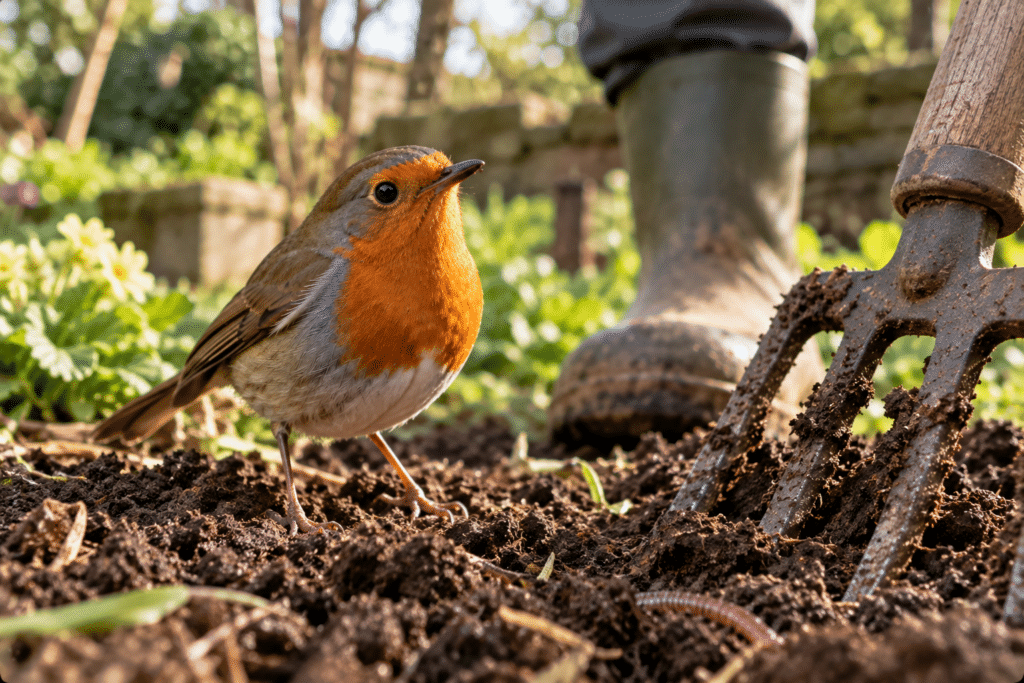
Anyone who has spent time digging, weeding or planting in a British garden will probably have encountered a robin watching proceedings with remarkable interest.
Sometimes it perches on a nearby fence. Sometimes it hops along the freshly turned soil. Occasionally, it comes so close that you could be forgiven for thinking you’ve made a new friend.
And in a way, you have. Just don’t expect it to help with the gardening.
A Familiar Face Means a Free Lunch
European robins are unusually bold around people, particularly in Britain, where they have developed a reputation for being enthusiastic gardening companions.
Their interest isn’t entirely social, however.
Digging and disturbing the soil exposes earthworms, insects and other small invertebrates that would otherwise remain hidden underground.
To a hungry robin, a gardener armed with a spade is effectively opening a restaurant.
And the best part? There’s no bill at the end.
Clever Enough to Recognise You
Research into bird behaviour has demonstrated that some birds can distinguish between individual humans, while observations of robins suggest they can become familiar with particular gardeners.
Rather than treating every person as an unfamiliar threat, a robin can learn that certain individuals are associated with food and relatively little danger.
This helps explain why one robin might confidently approach somebody working in the garden while remaining wary of another person.
What appears to be affection may actually be a combination of familiarity, learned behaviour and a healthy appetite.
Nevertheless, recognising a reliable source of food is a remarkable ability for such a small creature.
Why British Robins Are So Bold
The European robin has a particularly close association with British gardens.
In woodland, robins naturally take advantage of disturbed ground, where larger animals can uncover insects and other food.
Gardeners create similar opportunities whenever they turn over soil or clear fallen leaves.
Over time, robins can learn to associate these activities with an easy meal.
Their boldness also makes them one of Britain’s most recognisable and best-loved garden birds.
And unlike many species that become difficult to spot outside the breeding season, robins can be seen and heard throughout the year.
A Little Garden Visitor Worth Looking After
There are simple ways to make gardens more welcoming to robins.
Leaving some natural vegetation, avoiding unnecessary pesticide use and providing fresh water can all help support garden wildlife.
Robins may also appreciate suitable supplementary food, particularly during colder weather when natural food becomes harder to find.
But perhaps the nicest thing you can do is simply allow them to carry on behaving naturally.
After all, that robin perched beside your flowerbed isn’t necessarily asking to become your best friend.
It’s watching, learning and waiting for you to uncover its next meal.
And the next time a robin follows you around the garden, remember: you might think you’re doing the gardening, but as far as that little bird is concerned, you’re the catering department.
Source: BBC Countryfile – Why your garden robin might recognise you








Add comment
You must be logged in to post a comment.