

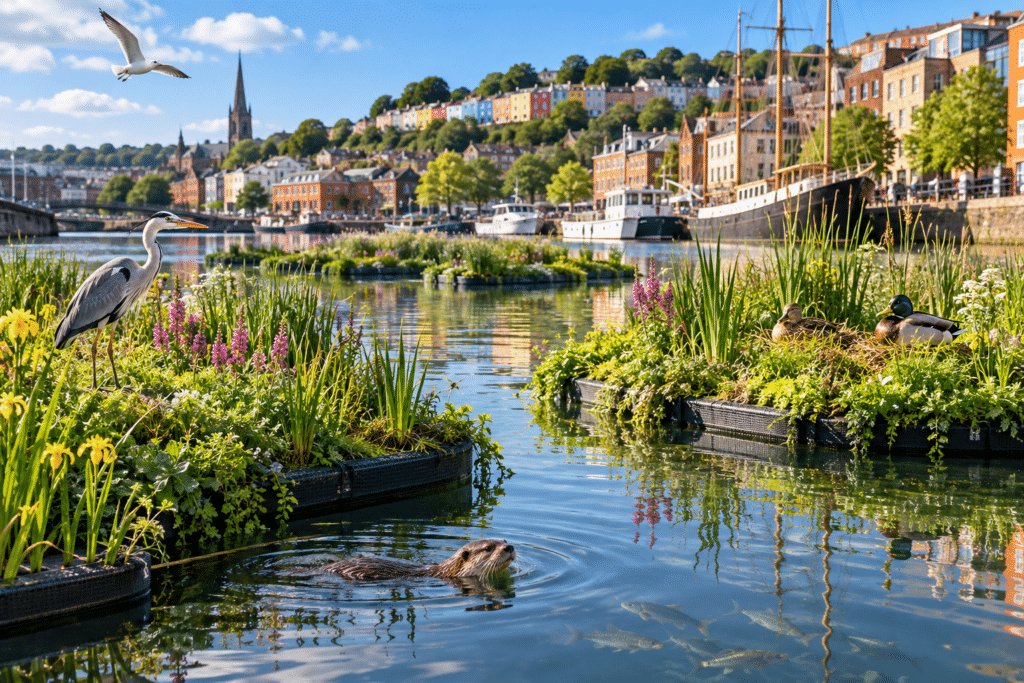
Bristol is making a splash for wildlife
Floating wetlands transform its historic harbour into a thriving haven for nature.
Who says you need acres of countryside to give wildlife a helping hand? Certainly not Bristol, where an ingenious environmental project is bringing a little wilderness right into the heart of the city.
Floating wetlands are taking root across Bristol Harbour, turning stretches of urban water into miniature ecosystems packed with plants, flowers and potential new homes for wildlife.
And the best part? They’re doing it without needing to reclaim a single square metre of valuable city land.
A Floating Success Story
These clever floating islands are planted with native vegetation, with roots extending beneath the water’s surface to provide shelter for fish and other aquatic creatures.
Above the waterline, the greenery offers opportunities for birds, bees and other pollinating insects to feed, rest and find refuge.
It’s a simple idea with potentially enormous benefits.
Rather than leaving urban waterways as little more than corridors for boats, Bristol is demonstrating how they can become part of a much wider network of wildlife habitats.
And the project is already growing.
In October 2026, Bristol City Council announced the installation of two additional floating ecosystems at Redcliffe Quay, bringing the number installed during the year to six.
Making Waves for Nature
The floating wetlands aren’t just about creating attractive patches of greenery.
Their underwater root systems can help improve local water quality by taking up nutrients and providing surfaces for beneficial microorganisms.
Meanwhile, the vegetation creates habitat in places where traditional riverbanks and natural wetlands have long since disappeared beneath roads, buildings and harbour walls.
For wildlife navigating an increasingly urban world, these small green islands could provide valuable stepping stones between larger habitats.
And for Bristol’s residents and visitors, they offer something equally worthwhile: the chance to see nature flourishing in the middle of a busy city.
Bristol’s Bigger Ambition
The floating islands form part of a much broader effort to restore and celebrate wetlands across Bristol.
With ambitions for more than 200 wetland projects over five years, the city is working towards becoming the UK’s first internationally recognised Wetland City.
It’s an ambitious goal, but one that recognises just how important wetlands are.
From supporting biodiversity and improving water quality to helping communities reconnect with the natural world, these often-overlooked habitats have an extraordinary amount to offer.
And Bristol is showing that restoring nature doesn’t always require enormous landscapes or multimillion-pound engineering projects.
Sometimes, all it takes is a floating platform, a few plants and a little imagination.
A Harbour Full of Hope
At a time when stories about declining wildlife and disappearing habitats dominate environmental headlines, Bristol’s floating wetlands offer a refreshing change.
They’re proof that cities don’t have to be places where nature struggles to survive.
With a little creativity, they can become places where wildlife has the opportunity to flourish.
And if giving nature a helping hand means getting a little wet along the way, Bristol certainly seems happy to dive right in!





Add comment
You must be logged in to post a comment.