
The Winged Heroes Saving Coral Reefs from Behind
Scientists have discovered that one of nature’s least glamorous substances could be helping protect some of the world’s most spectacular coral reefs. And the unlikely heroes? Seabirds with remarkably productive bottoms!
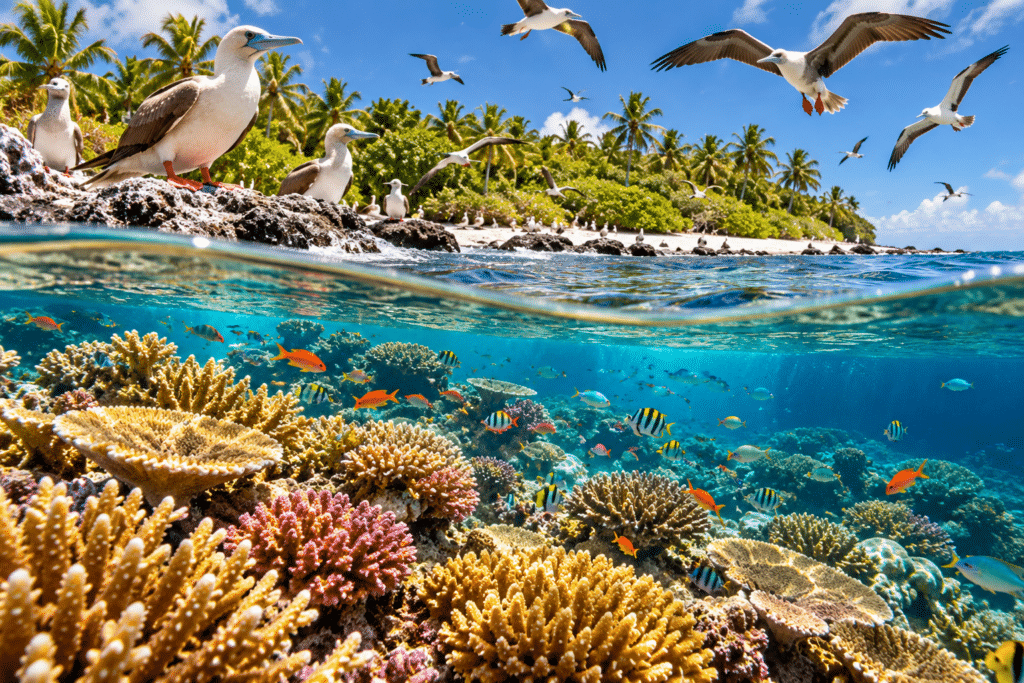
In the remote Pacific Ocean, more than a thousand miles south of Hawaii, lies Palmyra Atoll — a tropical paradise surrounded by dazzling coral reefs, crystal-clear waters and extraordinary marine life.
But scientists studying this remarkable ecosystem have uncovered a surprising connection between the birds nesting in the island’s forests and the colourful world beneath the waves.
The secret ingredient is bird poo.
Yes, really.
FROM THE TREETOPS TO THE OCEAN FLOOR
Thousands of seabirds, including red-footed boobies, white terns and sooty terns, make their homes on Palmyra Atoll.
Each day, they venture out across the ocean in search of fish and squid before returning to the island to feed their chicks and roost among the trees.
And while they’re there, nature takes its course.
Their droppings, known scientifically as guano, are packed with valuable nutrients, particularly nitrogen.
When tropical rain sweeps across the island, those nutrients are washed from the forest floor into the surrounding ocean.
There, they help nourish microscopic plankton, which support fish, manta rays and countless other marine creatures. Even coral can benefit from the increased availability of food.
What might seem like an unpleasant mess on land is actually part of an extraordinary natural recycling system beneath the waves.
A FOREST FULL OF POSSIBILITIES
Unfortunately, this remarkable relationship between land and sea has not always been allowed to flourish.
More than a century ago, coconut plantations transformed large areas of Palmyra’s native rainforest. The densely packed palms provided poor nesting habitat for many seabirds, reducing the number of birds bringing nutrients back to the island.
Invasive rats also devastated wildlife, preying on birds and disrupting the island’s delicate ecological balance.
But conservationists decided to turn things around.
In 2011, a successful programme eliminated invasive rats from the atoll, allowing native plants, land crabs and seabirds to recover.
Then, in 2019, a major forest restoration project began removing unwanted coconut palms and encouraging native trees to return.
Since then, more than a million coconut palms and sprouts have been removed.
As the native forest regenerates, conservationists hope increasing numbers of seabirds will return, bringing their valuable natural fertiliser with them.
GIVING CORAL A FIGHTING CHANCE
The implications could extend far beyond this tiny Pacific paradise.
Coral reefs around the world are facing enormous pressure from rising ocean temperatures and increasingly severe marine heatwaves.
While seabird droppings cannot prevent ocean warming, scientists believe restoring the natural flow of nutrients could help reef ecosystems remain healthier and recover more effectively from environmental stress.
Researchers are now studying how lessons from Palmyra might benefit other tropical islands where seabird populations have declined.
The approach is refreshingly straightforward: restore native forests, protect nesting birds and allow nature’s own processes to do their work.
And the benefits don’t stop at coral.
Healthier island ecosystems support everything from tiny plankton and colourful reef fish to majestic manta rays and thriving seabird colonies.
A LITTLE POO GOES A LONG WAY!
Palmyra Atoll is demonstrating something wonderfully simple about the natural world: everything is connected.
A bird catches a fish. It returns to its nest. Rain carries nutrients into the sea. Marine life benefits.
It’s an extraordinary reminder that protecting one species can create a ripple effect across an entire ecosystem.
And sometimes, the most important conservation breakthroughs come from the most unexpected places.
Who would have thought that helping save the world’s coral reefs might begin with a bird answering the call of nature?
Now that’s what we call a cracking piece of Good News!
Source: NPR, Lauren Sommer, 13 October 2026 — Some of the most pristine coral reefs have a secret weapon: birds.
Additional information: The Nature Conservancy — Palmyra Atoll Restoration Programme.





Add comment
You must be logged in to post a comment.