

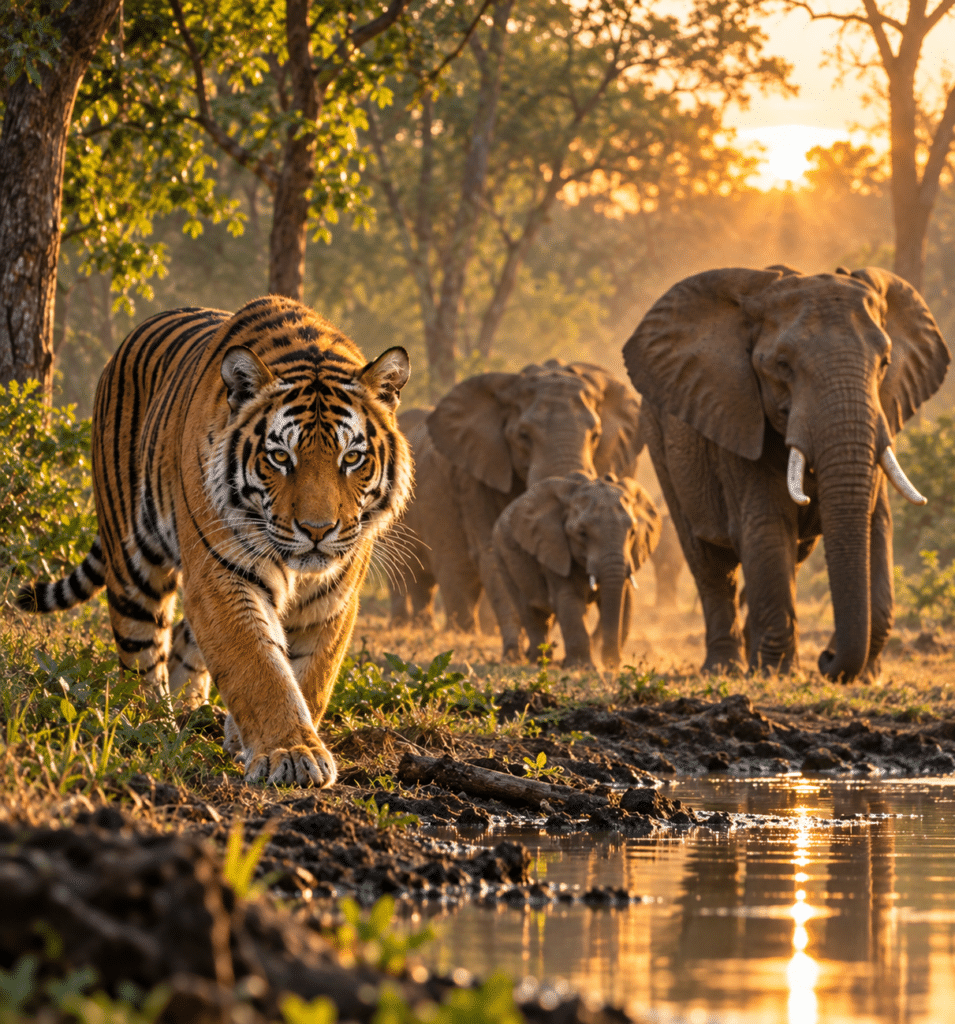
Nature is fighting back!
From the forests of Asia to the world’s oceans, some of the planet’s most threatened animals are making remarkable comebacks, proving that conservation really can work.
There is a roar of hope coming from the natural world.
A major new report from the World Wide Fund for Nature (WWF) has revealed that tigers, sea turtles, bluefin tuna and elephants are among the species benefiting from decades of determined conservation efforts.
Published on 8 October, WWF’s Living Planet Report 2026, subtitled The Science of Hope, offers compelling evidence that humanity can reverse some of the damage inflicted on the natural world.
And perhaps the most spectacular comeback belongs to the tiger.
THE TIGER ROARS AGAIN
In 2010, the global wild tiger population was estimated at just 3,200 animals.
By 2025, that figure had climbed to approximately 5,700 — an extraordinary increase of more than 70%.
The recovery follows years of coordinated action involving governments, conservation organisations and local communities.
Expanded protected areas, stronger anti-poaching patrols, action against wildlife trafficking and long-term investment have all helped give these magnificent predators a fighting chance.
The tiger remains a threatened species, but its recovery demonstrates what can happen when people refuse to accept extinction as inevitable.
TURTLES TURN THE TIDE
Beneath the waves, another remarkable conservation success has been unfolding.
In 2025, the green sea turtle became the first marine turtle to be reclassified from Endangered to Least Concern on the International Union for Conservation of Nature’s Red List.
The achievement follows approximately 50 years of international cooperation across some 80 countries where green turtles nest.
Protecting nesting beaches, safeguarding eggs, reducing accidental capture in fishing equipment and tackling illegal hunting have all contributed to the recovery.
For an animal that has inhabited Earth’s oceans for millions of years, it represents a remarkable new chapter.
TUNA MAKE A SPLASH
The oceans have another success story to celebrate.
Atlantic bluefin tuna populations had suffered devastating declines through decades of overfishing, while Pacific bluefin tuna numbers had fallen to a fraction of their historic levels.
But tighter fishing quotas, improved monitoring and international cooperation have helped both populations recover substantially.
According to WWF, neither Atlantic nor Pacific bluefin tuna is now considered overfished.
Atlantic bluefin tuna are even returning to British waters, providing an encouraging reminder that marine ecosystems can respond when given the opportunity.
ELEPHANTS NEVER FORGET — AND NEITHER SHOULD WE
On the African continent, conservation initiatives are also delivering encouraging results.
Although African savannah elephants remain endangered and continue to decline across much of their range, some populations in southern Africa are increasing.
A particularly important factor has been involving local communities directly in wildlife conservation.
By giving communities a meaningful role in protecting elephants and managing natural resources, conservation programmes have helped create incentives to safeguard these enormous animals and their habitats.
Combined with stronger anti-trafficking measures, these initiatives demonstrate that protecting wildlife and supporting local people can go hand in hand.
A PLANET WORTH FIGHTING FOR
The wider picture remains deeply concerning.
WWF’s report reveals that monitored vertebrate wildlife populations have declined by an average of 73% since 1970.
That figure represents the average change in monitored population sizes, rather than a loss of 73% of all individual wild animals.
Yet behind that troubling statistic lies another important finding.
Some 43% of the monitored populations are increasing, while a further 7% are stable.
The message is clear: nature’s decline is not inevitable.
Protecting habitats, tackling illegal exploitation, improving farming practices and investing in conservation can make an enormous difference.
The recoveries of tigers, turtles, tuna and elephants show that determined action can produce extraordinary results, sometimes within a single generation.
And while there is still an enormous amount of work to do, these successes offer something the world desperately needs.
Hope — backed by evidence.
William Blake famously wrote of the tiger burning bright in the forests of the night.
More than two centuries later, thanks to conservationists and communities around the world, thousands more of these magnificent creatures are once again roaming wild.
And that really is something worth roaring about.
Source: WWF — Living Planet Report 2026, press release, 8 October 2026








Add comment
You must be logged in to post a comment.