

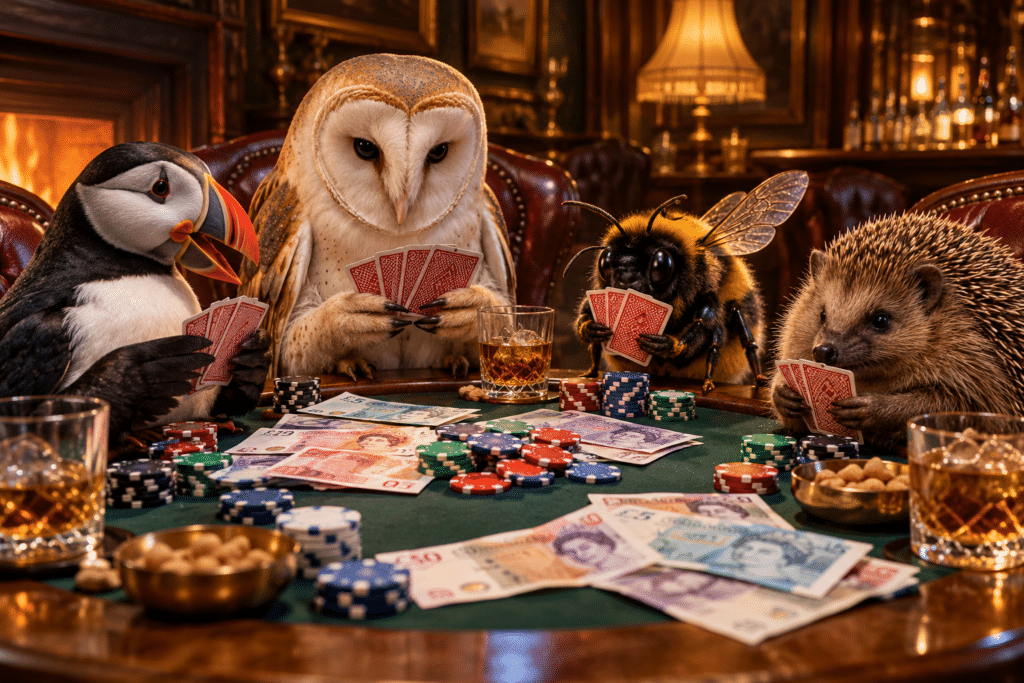
Britain’s banknotes are preparing for a walk on the wild side, with a puffin, barn owl, bumblebee and hedgehog taking centre stage in plans to celebrate the nation’s much-loved wildlife.
Money might not grow on trees, but Britain’s next generation of banknotes looks set to have considerably more in common with the natural world.
Four familiar faces from the British countryside and coastline — the colourful puffin, magnificent barn owl, industrious bumblebee and prickly hedgehog — have been highlighted as part of plans to bring wildlife to the country’s currency.
It’s a refreshing change of scenery for something that passes through millions of hands every day, and a chance to celebrate the remarkable creatures sharing our islands.
A Natural Choice
The move follows a public consultation about the future appearance of Bank of England notes, with wildlife emerging as a popular choice.
And it’s not difficult to understand the appeal.
Puffins, with their brilliantly coloured beaks and unmistakable waddles, are among Britain’s most recognisable seabirds. Barn owls, meanwhile, have captivated generations with their heart-shaped faces and almost silent flight across fields and meadows.
Bumblebees might be considerably smaller, but their contribution is enormous. As pollinators, they play a vital role in supporting wildflowers, gardens and food production.
Then there’s the humble hedgehog, a familiar garden visitor whose unmistakable spines have made it one of Britain’s most cherished wild mammals.
Four very different creatures, each with its own place in the country’s natural heritage.
Worth More Than Money
Beyond their obvious charm, the animals offer an opportunity to draw attention to the importance of protecting Britain’s wildlife.
Hedgehogs have experienced substantial population declines in parts of the country, while puffins face pressures including changes to marine food supplies and climate conditions.
Bumblebees are affected by habitat loss and other environmental pressures, and barn owls depend on suitable hunting grounds and nesting sites.
Featuring wildlife on something as familiar as a banknote could help bring these challenges into everyday conversation.
After all, a hedgehog appearing on a five-pound note might encourage someone to think about making their garden a little more wildlife-friendly.
A Change in Your Pocket
The new designs will take time to develop and introduce, so nobody should expect to find a puffin peering out of their wallet tomorrow morning.
Existing banknotes will remain in circulation while the Bank of England works through the design and production process.
For now, the prospect of British wildlife appearing on the nation’s money is a welcome reminder that some of our greatest treasures cannot be measured in pounds and pence.
And when the new notes eventually arrive, Britain’s wildlife might just prove to be the most popular faces in the country.
As for our four hopeful stars, we reckon the hedgehog will be keeping a particularly close eye on the cash — while the puffin looks suspiciously like it’s holding a winning hand.








Add comment
You must be logged in to post a comment.