

The ozone layer is healing
Scientists say decades of global action are paying off!
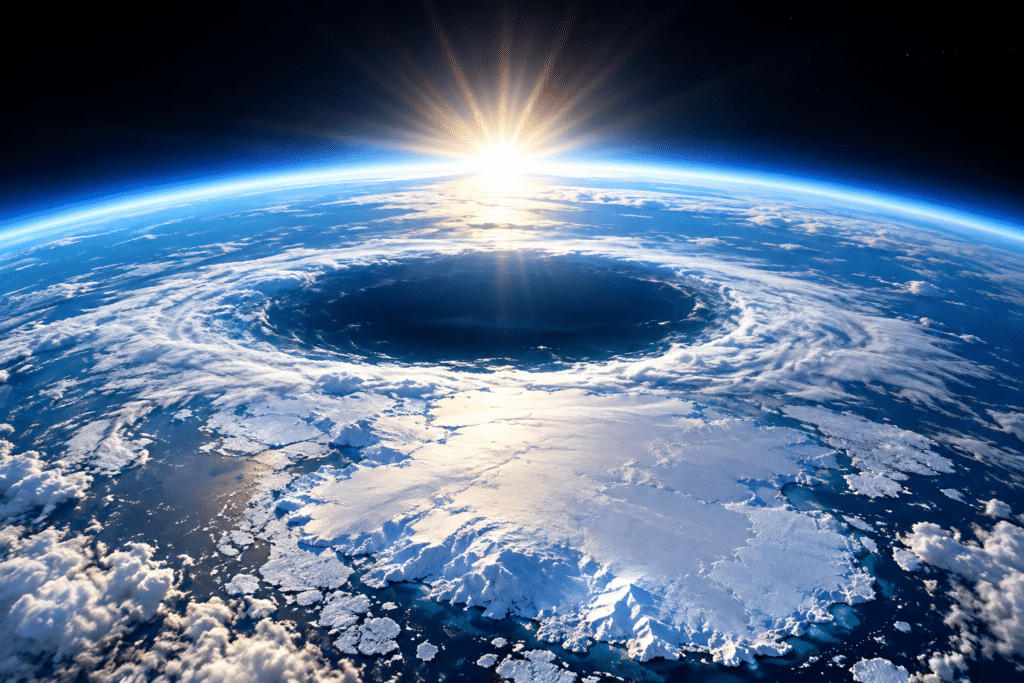
It was once one of the biggest environmental scares on the planet. Now, nearly four decades after countries around the world agreed to tackle the chemicals destroying Earth’s protective ozone layer, scientists have some genuinely good news: it is recovering.
The Antarctic ozone hole recorded in 2025 was one of the smallest seen in decades, according to the latest assessment from the World Meteorological Organization (WMO).
The hole ranked as the fourth to fifth smallest since severe ozone depletion patterns were first observed in 1992, while both its depth and overall extent were significantly below the 1990–2010 average for the second year running.
At its peak, the ozone mass deficit reached 36.7 million tonnes – more than 25 per cent below the 1990–2010 average of 50.1 million tonnes.
And although the size of the Antarctic ozone hole naturally varies from year to year because of changing atmospheric conditions, scientists say the longer-term direction is encouraging.
The ozone layer has been recovering since around 2000.
A problem the world actually tackled
The story stretches back to the 1980s, when scientists discovered that chemicals widely used in products including refrigerators, air-conditioning systems, fire suppressants and aerosols were damaging the ozone layer.
That thin layer of ozone high in Earth’s atmosphere performs an extraordinarily important job: it absorbs almost all of the Sun’s most dangerous short-wave ultraviolet radiation, helping protect people, animals and ecosystems below.
Faced with evidence that it was being depleted, countries came together in 1987 to agree the Montreal Protocol.
The international agreement progressively phased out substances responsible for damaging the ozone layer, including chlorofluorocarbons – better known as CFCs.
It worked.
Over the following decades, atmospheric concentrations of controlled ozone-depleting substances fell substantially. As those chemicals declined, scientists began detecting the first signs of recovery.
Today, the Montreal Protocol is regarded as one of the great examples of successful international environmental action.
Decades in the making
There was never going to be a quick fix.
Many ozone-destroying chemicals remain in the atmosphere for decades, meaning that even after their production was curtailed, the planet needed time to recover from the damage already done.
That recovery is now becoming increasingly apparent.
The 2025 Antarctic ozone hole was not only relatively small, it also disappeared earlier than usual, closing on 1 December – the earliest closure since 2019.
Scientists estimate that during the main depletion period its average area was around 18.7 million square kilometres – roughly 30 per cent smaller than the largest ozone hole ever recorded, in 2006.
There is still a considerable way to go, and scientists caution that individual years can vary significantly.
But if current policies remain in place, previous international assessments have estimated that the ozone layer could return to approximately 1980 levels by around 2040 across most of the world, 2045 over the Arctic and 2066 over Antarctica.
Continued monitoring will be essential, particularly because unexpected emissions of some controlled chemicals have previously been detected and ultraviolet radiation remains a health concern.
But the overall message is an unusually encouraging one.
Human activity created a global environmental problem.
Scientists identified what was causing it.
Countries around the world agreed to act.
Industry changed.
And, decades later, the atmosphere is responding.
Sometimes fixing the planet takes patience.
But this time, it appears to be working.







Add comment
You must be logged in to post a comment.