

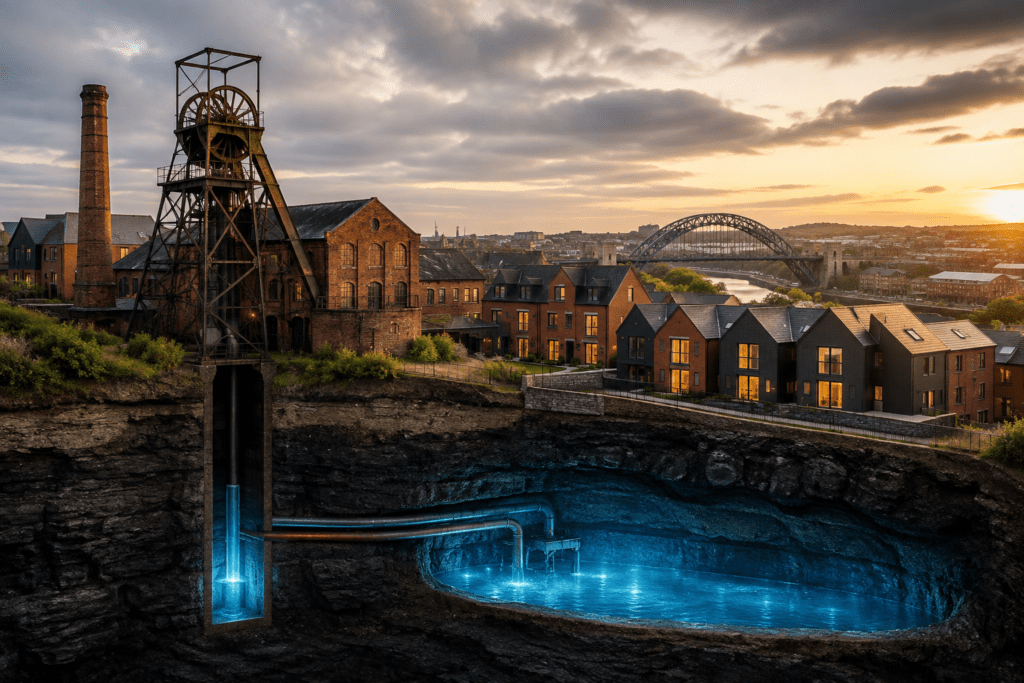
Britain’s abandoned coal mines are being turned into a surprising source of clean heat
For generations, coal mines beneath the North East helped keep Britain warm. Now, decades after many of those pits closed, they are being asked to do the same job again — only this time, nobody needs to dig out or burn a lump of coal.
In Gateshead, water that has naturally flooded former mine workings is being used as a source of low-carbon heat.
It sounds almost too neat to be true.
After mines close, groundwater gradually returns and fills the abandoned tunnels and shafts. Deep underground, that water is naturally warmed by the surrounding rocks and remains at a relatively stable temperature throughout the year.
Rather than leaving all that warmth beneath our feet, engineers can pump the mine water to the surface and use heat pumps to extract and increase its heat. The warmed water can then be distributed through a district heating network to buildings that need it.
In Gateshead, mine water drawn from around 150 metres underground arrives at roughly 15°C. Large heat pumps then raise the temperature substantially before the energy is distributed through the town’s heat network.
The system is already helping to heat hundreds of homes, alongside buildings including Gateshead College and other local facilities.
And the idea isn’t confined to homes.
From coal mines to wine warehouses
There is even a connection to Britain’s drinks industry.
County Durham-based Lanchester Wines has embraced mine-water heating at its warehouse complex, using water from abandoned workings beneath the site as a renewable source of heat.
According to Lanchester, its mine-water heat-pump systems provide around 4 MW of heating capacity across more than 33,000 square metres of warehouse space.
The company says the technology has reduced the carbon footprint associated with heating those warehouses by around 80%.
Not bad for infrastructure left behind by an industry whose heyday ended generations ago.
A problem becoming part of the solution
Britain has an enormous legacy of abandoned coal workings. According to the Mining Remediation Authority, around a quarter of UK homes and businesses are located above former coalfields.
Historically, water accumulating in abandoned mines has often been something that needed to be managed carefully to prevent pollution.
But that same water also represents an enormous potential reservoir of low-carbon thermal energy.
The particularly clever part is that nobody needs to reinvent the landscape. The shafts and tunnels have already been excavated. The water is already there. And communities that once developed around coal mining are frequently sitting directly above the potential heat source.
Researchers and public bodies are now investigating where else the technology could work, potentially giving Britain’s mining heritage an unexpected role in its energy future.
Coming full circle
There is something rather wonderful about the symmetry.
Miners once descended beneath the North East to bring up coal that would heat homes and power industry.
The mines closed. The tunnels flooded. Nature gradually reclaimed them.
And now, generations later, we’re returning to those same workings for heat again — except this time the coal can stay exactly where it is.
Old mines, it turns out, may still have a few tricks left in them.








Add comment
You must be logged in to post a comment.