

How Beavers Beat London’s Flooding Problem
For years, heavy rain meant trouble around Greenford station in west London. Downpours could leave the ticket hall flooded, sandbags were regularly needed and nearby homes were affected too.
Solving it looked likely to require expensive engineering works.
Then a family of beavers got to work.
The Eurasian beavers were introduced to Paradise Fields, a 10-hectare wetland site in Greenford, in 2023 as part of the Ealing Beaver Project. It was the first time beavers had been returned to this part of London in centuries — and nobody needed to give the new arrivals a set of blueprints.
Nature’s own engineers
Beavers are often described as ecosystem engineers, and at Paradise Fields they’ve demonstrated exactly why.
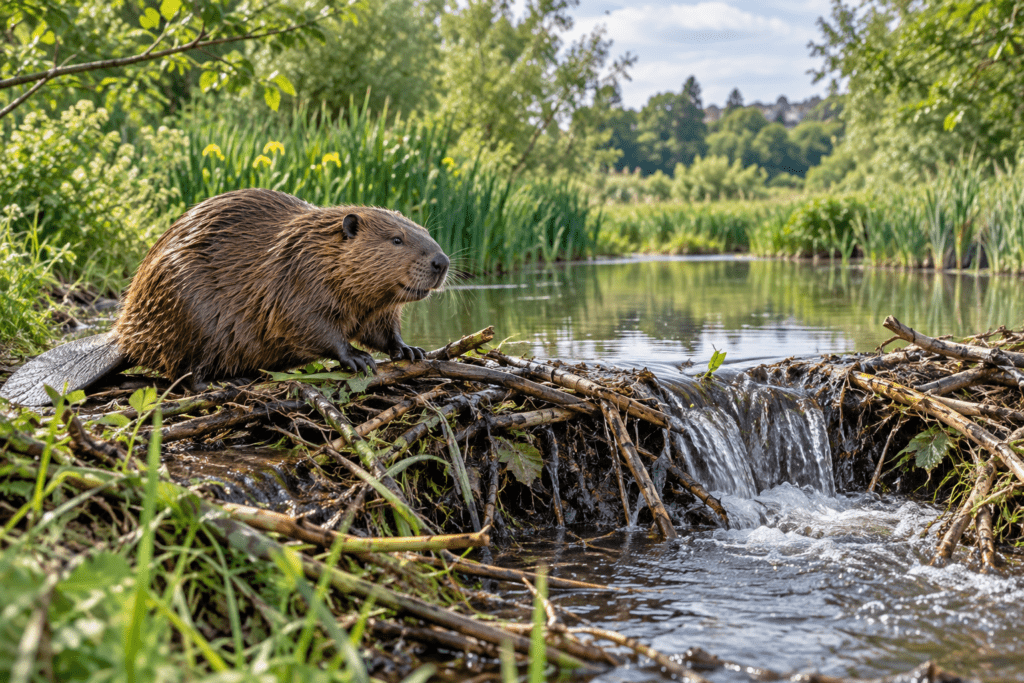
By building dams, digging channels and changing the way water moves through the landscape, the animals have created larger areas of wetland where rainwater can be held and released more slowly.
That matters because instead of a heavy downpour rushing rapidly downstream towards Greenford, more of that water can now be retained within the landscape.
The results have been remarkable. In June, England’s first urban beaver officer, Şeniz Mustafa, told Positive News that even following particularly heavy rainfall, the area had not flooded.
And this isn’t merely a one-off success. In an August update, Ealing Wildlife Group reported that the beavers’ dams were continuing to help prevent flooding both at Greenford station and in the surrounding residential area.
A wetland comes back to life
The benefits aren’t confined to keeping people’s feet dry.
Before the beavers arrived, parts of Paradise Fields were in poor ecological condition. Since their return, their dams and tree-felling have created new pools, open water, deadwood and other habitats that can support everything from aquatic invertebrates to amphibians, bats and birds.
Monitoring has recorded freshwater shrimp, diving beetles and water scorpions, while frogs and smooth newts have appeared on the site. Kingfishers and water rails have also been visiting more frequently.
Water testing has produced another encouraging result: although water entering Paradise Fields through Costons Brook has shown high levels of pollution, monitoring found substantially lower levels of phosphates and nitrates in water leaving the site.
And the beavers seem pretty happy too
Perhaps the sweetest indication that Paradise Fields is working came this summer.
Resident beavers Willow and Woody welcomed another two kits in 2026, their third consecutive year of successful breeding. The youngsters have already been spotted swimming, feeding and exploring their increasingly wild London home.
What began as an experiment in urban rewilding has therefore become something considerably bigger: a living demonstration of how restoring nature can potentially help solve problems for people as well.
No concrete flood barrier. No enormous piece of machinery.
Just some branches, some mud — and a family of extremely industrious beavers.
Now that’s a dam good job.








Add comment
You must be logged in to post a comment.