

How BSL Is Bringing Live Music to Deaf Fans
For many people, there is nothing quite like live music. The lights go down, the crowd erupts and the first notes fill the venue. But enjoying a concert isn’t only about what you can hear.
British Sign Language interpreters are helping make that experience accessible to deaf audiences too — translating not simply the words being sung, but the energy, rhythm and emotion of a live performance.
Luke Holdsworth, who was born profoundly deaf, understands just how important that can be. He didn’t attend his first concert until his mid-twenties, having previously assumed that live music simply wasn’t something for him.
Today, things are very different.
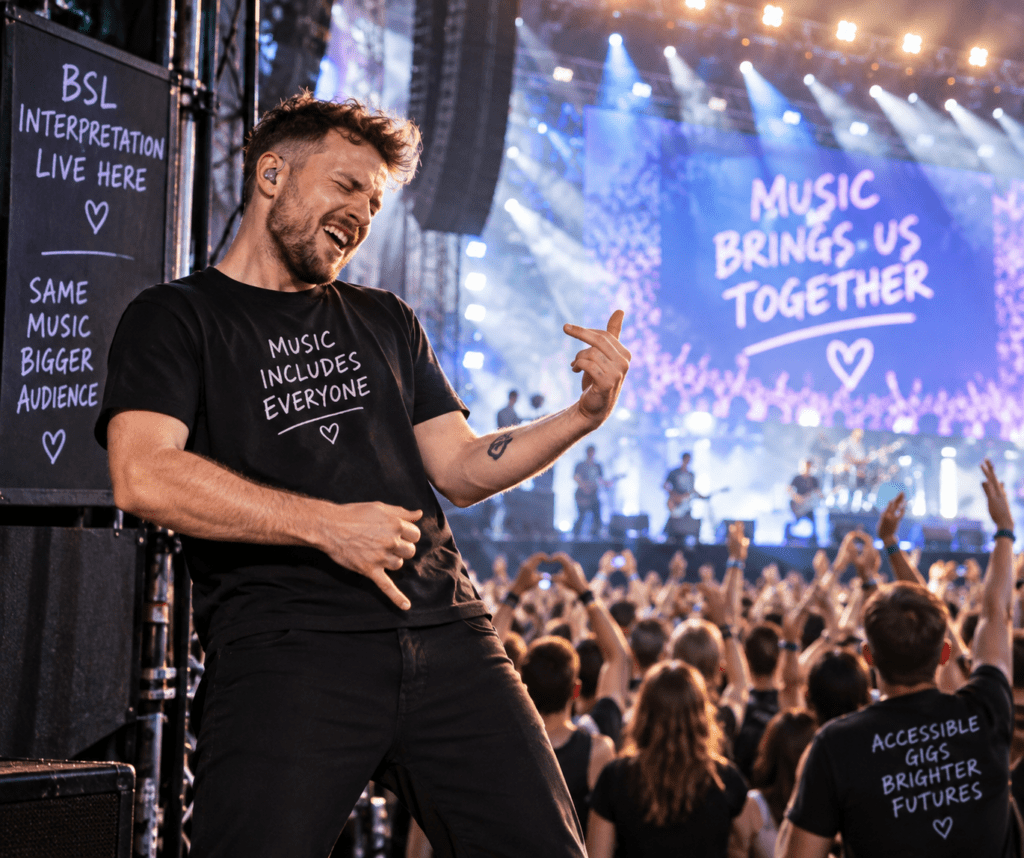
Luke has become a BSL performance interpreter, bringing live performances to life through sign language and physical expression. His work has taken him to concerts by major artists including Lewis Capaldi, Paloma Faith and Disclosure, as well as Oasis reunion shows.
And sometimes conventional signing alone isn’t quite enough.
When a guitarist launches into a solo, for example, Luke may reach for an imaginary instrument of his own. A burst of enthusiastic air guitar can communicate something about the performance that translating words alone simply cannot.
It is a wonderfully simple idea: make the whole performance accessible, not just the lyrics.
More Than Words
Music is about far more than the words being sung. There is tempo, intensity, humour, personality and the unmistakable atmosphere created when thousands of people experience something together.
A skilled performance interpreter can help convey those elements visually, allowing deaf concertgoers to participate more fully in the same shared experience as everyone around them.
Luke would now like accessibility to become a normal part of live entertainment rather than something deaf people have to request individually.
That means venues and promoters thinking about BSL interpretation from the beginning, providing it wherever possible and clearly telling audiences when accessible performances are available.
The ultimate goal is beautifully straightforward: a young deaf person should be able to go to a concert with their friends and feel that the experience was designed for them too.
Live music may traditionally be something we think of as being heard, but stories like this are a reminder that music can also be seen, felt and shared.
And if communicating a particularly spectacular guitar solo occasionally requires a little air guitar?
All the better.






Add comment
You must be logged in to post a comment.