

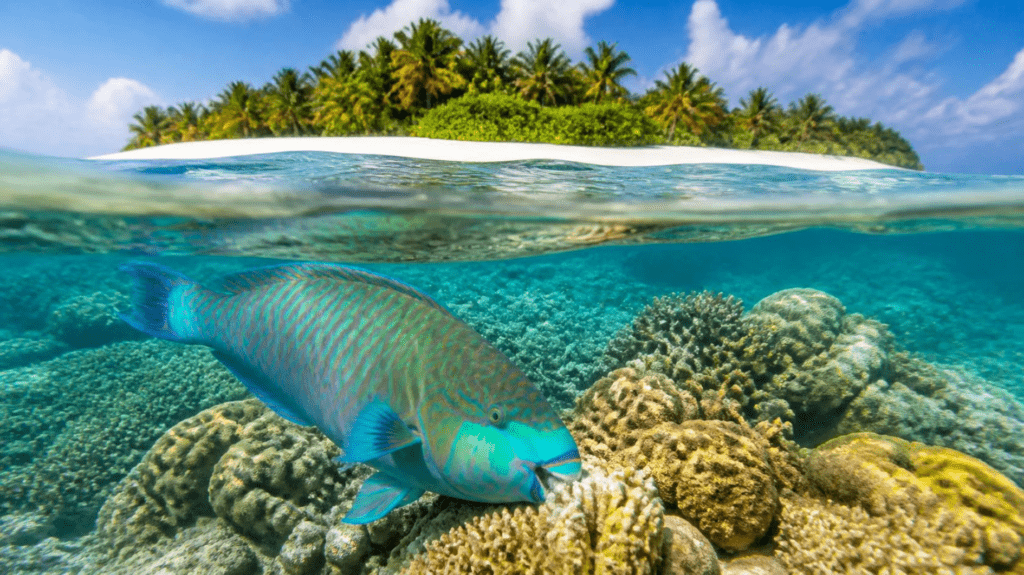
The Maldives is famous for white sandy beaches, turquoise seas and spectacular coral reefs. But one of the creatures helping to keep those picture-perfect islands looking the way they do has a rather less glamorous job.
Meet the parrotfish — one of nature’s most colourful beach builders.
Parrotfish spend much of their lives grazing on coral reefs, scraping algae from the surface with their powerful, beak-like teeth. In the process they grind up pieces of coral and limestone, digest what they can and eventually return the remainder to the ocean as incredibly fine sand.
Yes. Some of those beautiful tropical beaches have had a little help from parrotfish poo.
It sounds amusing, but the ecological role these fish play is anything but trivial. By grazing on algae, parrotfish help prevent it from overwhelming corals, giving reefs a better chance to remain healthy. And the sediment they produce contributes to the sand surrounding tropical reef islands.
From Social Media to Real Protection
The good news from the Maldives isn’t simply that these extraordinary fish exist — it’s that people decided they were worth protecting.
When concern grew about increasing numbers of parrotfish appearing in catches and fish markets, conservationists used social media to bring attention to what was happening.
The #FishForTomorrow campaign helped explain why healthy populations of reef fish matter not just to marine wildlife, but to the islands and communities that depend upon healthy reefs.
Thousands of people became involved, demonstrating how conservation can move beyond scientists and environmental organisations and become something an entire community participates in.
The campaign ultimately helped build public support for protecting parrotfish, and the Maldives introduced legal protection preventing them from being caught or killed.
Protecting More Than One Colourful Fish
Protecting parrotfish has consequences far beyond the survival of a single species.
Coral reefs provide habitats for countless marine animals, help support fishing and tourism, and form part of the natural defence of low-lying islands against the ocean.
The work continues today, with conservationists, local communities, fishers and resorts working on broader measures to protect the Maldives’ marine environment.
It’s a wonderful example of something we particularly like at Good News: ordinary people learning about a problem, sharing the message and helping turn awareness into genuine change.
And perhaps there’s another lesson.
Sometimes one of the most important jobs in an ecosystem is being performed by an animal quietly swimming around a coral reef, munching algae and — there’s really no more elegant way of putting this — pooping out a beach.
Read the Original Story & Support Mongabay
This Good News story was inspired by reporting from Mongabay, an independent nonprofit environmental journalism organisation covering conservation and nature around the world.
We strongly encourage you to read their original reporting:
Read the original Mongabay story
Mongabay makes its environmental journalism freely available and relies on grants and donations to support its work. If you enjoy their reporting and would like to help fund more of it, you can support them directly.




Add comment
You must be logged in to post a comment.